The Bridge Between the American Agricultural Heartland and Global Demand

The AgTech Evolution: Why Asset-Light Models Are Winning the 2026 Export Race
1/26/20262 min read

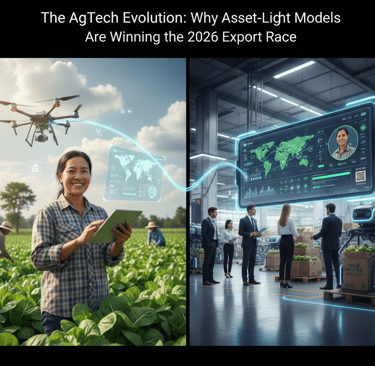
The agricultural sector, historically a bastion of tradition and tangible assets, is undergoing a profound transformation. As we look towards 2026, the landscape of global agricultural exports is being reshaped not by vast landholdings or massive machinery fleets, but by agile, asset-light AgTech models. This isn't just a trend; it's an evolution, driven by efficiency, sustainability, and a keen understanding of modern market demands.
For decades, the dominant paradigm in agriculture was one of scale through ownership. Bigger farms, more tractors, larger processing plants – these were the metrics of success. However, this capital-intensive approach often came with significant drawbacks: high overheads, slow adaptation to market shifts, and a heavy environmental footprint. The AgTech revolution, particularly its asset-light proponents, is dismantling this model and offering a more nimble, resilient alternative.
What exactly defines an "asset-light" AgTech model?
It's an approach that prioritizes technology, data, and specialized services over direct ownership of physical assets like land, equipment, or even vast quantities of inventory. Instead, these companies leverage partnerships, cloud-based solutions, AI-driven analytics, and precision farming techniques to optimize existing resources and connect producers directly with global markets.
Consider a small-to-medium-sized farm in, say, Southeast Asia, aiming to export high-value produce to Europe. Traditionally, this would involve navigating complex logistics, storage, quality control, and distribution networks, each requiring significant capital outlay or reliance on multiple intermediaries. An asset-light AgTech model, however, can provide a seamless solution.
Imagine a platform that connects this farmer directly with buyers, provides real-time data on optimal planting and harvesting times based on predictive analytics, and even facilitates access to shared processing facilities or cold chain logistics networks. This significantly reduces the need for the farmer to own expensive infrastructure, democratizing access to global export markets.
Why are these models poised to win the 2026 export race?
Reduced Barrier to Entry: Smaller producers can access advanced technologies and global markets without prohibitive upfront investments. This fosters innovation and diversification in export offerings.
Agility and Responsiveness: Asset-light companies can pivot quickly in response to changing consumer demands, climate challenges, or geopolitical shifts. They are not encumbered by fixed assets that become liabilities during market fluctuations.
Enhanced Efficiency and Sustainability: By optimizing resource use through precision agriculture, data analytics, and shared services, these models significantly reduce waste and environmental impact, appealing to increasingly eco-conscious global consumers and regulations.
Data-Driven Decision Making: Real-time data on crop health, soil conditions, market prices, and consumer preferences enable smarter decisions, leading to higher-quality produce and better market alignment.
Global Connectivity: Platforms and digital marketplaces fostered by asset-light AgTech bridge geographical divides, connecting producers directly with consumers and B2B buyers across continents, bypassing traditional, often inefficient, supply chains.
The shift towards asset-light models in AgTech isn't just about technological advancement; it's about a fundamental re-evaluation of value creation in agriculture. In 2026, the exporters that dominate will be those who have embraced smart partnerships, leveraged data to its fullest potential, and focused on delivering high-quality, sustainably produced goods to a global audience, all while keeping their capital light and their operations agile. The future of agricultural exports is digital, distributed, and decidedly asset-light.
Wigglesworth International
Newsletter
© 2026. Wigglesworth International. All rights reserved.
Premium U.S. Agricultural Exports