The Bridge Between the American Agricultural Heartland and Global Demand

The Rising Global Demand for Plant-Based Proteins: Cashew and Almond Applications
1/5/20262 min read
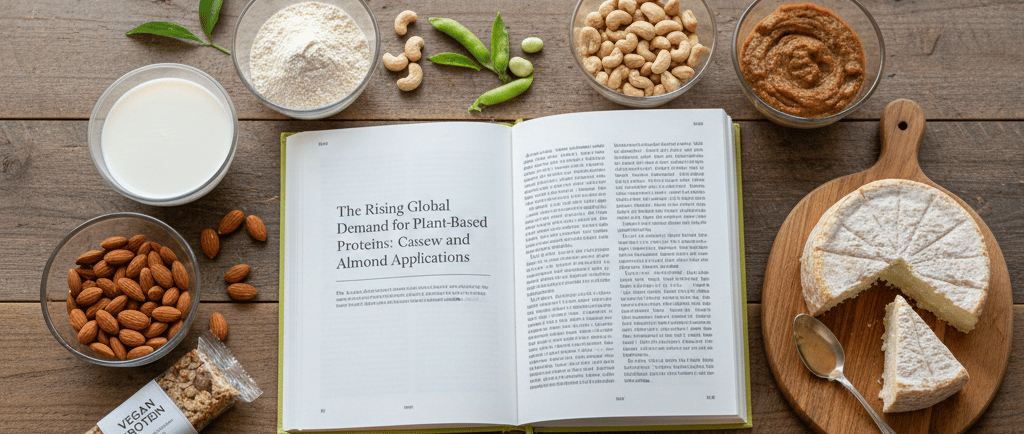
In the rapidly evolving landscape of 2026, the global food industry is witnessing a significant paradigm shift. As consumers move away from "engineered" substitutes and toward whole-food ingredients, the demand for plant-based proteins has surged. Specifically, almonds and cashews have emerged as the dual engines of this growth, valued not just for their nutritional profiles but for their unparalleled functional versatility in culinary applications.
The Market Surge
The global plant-based protein market is projected to exceed $34 billion by 2030, with a steady growth rate of nearly 8% annually. This trajectory is fueled by a more discerning "flexitarian" consumer base that prioritizes clean labels and digestive health over environmental ethics alone. In this environment, tree nuts have claimed a dominant stake, with almond-based products alone accounting for roughly 45% of the nut-based milk market.
Almonds: The Nutritional Powerhouse
Almonds have become a cornerstone of innovation because of their "neutral canvas" flavor profile. Beyond the ubiquitous almond milk, manufacturers are now utilizing defatted almond flour and high-protein isolates to fortify snacks and baked goods without compromising texture.
A single ounce (28g) of almonds provides:
6g of protein
4g of fiber
50% of the Daily Value for Vitamin E
These attributes make almonds ideal for "precision wellness" products, such as almond-protein clusters and functional bars that target gut health and weight management.
Cashews: The Secret to Creamy Textures
While almonds provide structure and protein, cashews are the industry’s preferred solution for mimicking the mouthfeel of dairy. Due to their high fat content and unique starch composition, cashews possess a natural emulsification property that other nuts lack.
This has led to a boom in cashew applications within the $1.5 billion plant-based condiment and cheese market:
Vegan Cheeses: Cashews serve as the base for cultured bries and camemberts, providing the necessary fats for a realistic "melt."
Barista-Grade Milks: When blended, cashews create a micro-foam superior to soy or oat, making them a favorite in the high-end HoReCa (Hotel, Restaurant, and Café) sector.
Culinary Sauces: From vegan "alfredo" to fermented spreads, cashews allow for a clean-label alternative to chemical thickeners and gums.
Future Outlook and Challenges
Despite the optimism, the industry faces headwinds. Climate change has impacted almond yields in California (which produces 80% of the world's supply), while cashew supply chains remain vulnerable to geopolitical instability in Africa and Southeast Asia.
To combat this, 2026 has seen a rise in "hybrid" innovations, where brands blend cashew and almond proteins with emerging sources like pea or faba bean. This not only optimizes cost but also creates a more complete amino acid profile. As the industry matures, the focus remains clear: providing nutrient-dense, familiar ingredients that prove plant-based eating can be as indulgent as it is healthy.
Wigglesworth International
Newsletter
© 2026. Wigglesworth International. All rights reserved.
Premium U.S. Agricultural Exports